L'Ogrelet
L’Ogrelet lives alone with his mother in a house deep in a dense forest, set apart from the village community. The day he begins going to school and meeting other children, he discovers what makes him different: he is the son of an ogre whom his mother loved passionately. To free himself from his irresistible attraction to fresh blood, he must face three trials—from which he will emerge transformed.
The educational resources for this play have been made accessible to students with visual impairments through our partnership with the Consortium Centre Jules-Léger. We are deeply grateful for their invaluable collaboration.
Here is an excerpt from the full teaching guide. A shorter version will also be made available to you upon purchase. All materials are in French.
Here is an overview of the teaching tools included with the purchase of the audio play:

Video Capsule – The Dramatic Text (for elementary-level students)
A literary form written for the stage, the dramatic text is at the heart of the Théâtrophone experience. In this video capsule, Sam and Sacha explore the different elements of a dramatic text, introducing students to stage directions, dialogue, and the unique features of audio theatre.
Video Capsule – Stage Directing (for elementary-level students)
Stage directing means guiding an artistic work and bringing all of its elements together into a harmonious performance, much like a conductor leading an orchestra. In this video capsule, Sam and Sacha introduce students to the work of directing and performance direction.
Video Capsule – Vocal Interpretation (for elementary-level students)
A subtle blend of instinct and technique, vocal performance is what brings characters to life in an audio play. In this video capsule, Sam and Sacha explore vocal expression, highlighting the most important elements of the creative process.
Video Capsule – Sound Design (for elementary-level students)
In theatre, sound design encompasses music, sound, and atmosphere, while also playing an important dramatic role in the interpretation of a work. In this video capsule, Sam and Sacha present the different stages involved in creating a soundscape.
Video Capsule – The Dramatic Text (for secondary-level students)
A literary genre unique to theatre, dramatic text is a central element of the Théâtrophone experience. In this video clip, historian and critic Alexandre Cadieux introduces young audiences to the structure and conventions of dramatic text, while preparing them to listen to theatre.
Video Capsule – Stage Directing (for secondary-level students)
Stage directing means overseeing every aspect of an artistic work in order to present audiences with a production in which all elements work together in harmony, much like a conductor leading an orchestra. In this video capsule, stage director Édith Patenaude explores the fundamentals of her craft, as well as the unique aspects of directing readings for audio theatre.
Video Capsule – Vocal Interpretation (for secondary-level students)
A subtle blend of instinct and technique, vocal interpretation is what brings characters to life in audio theatre. In this video capsule, actress and diction coach Maude Bouchard breaks down vocal work to reveal its complexity to students — and above all, its immense creative potential.
Video Capsule – Sound Design (for secondary-level students)
In theatre, sound design encompasses music, sound, atmosphere, and serves as an important dramatic element in the interpretation of a play. In this video capsule, composer and sound designer Jean Gaudreau (also known as Larsen Lupin) invites students to explore the world of sound creation.
Video Capsule – Classical Theatre (for secondary-level students)
This new video capsule is an optional addition to the proposed educational journey. In this video capsule, Marie-Eve Pelletier and Carl Béchard invite students to discover the history and conventions of classical theatre.
Video Capsule – Exploring Molière (for secondary-level students)
This new video capsule is an optional addition to the proposed educational journey. In this video capsule, Marie-Eve Pelletier and Carl Béchard invite students to discover the work of Molière.
Play Excerpt
Activities Guide (elementary-level)
Activities Guide (secondary-level)
Glossary
Glossary (with English support)
Student Workbook (Grades 3 to 6)
Student Workbook (secondary school)
Activities Guide (elementary-level) (outside Québec)
Links to the Curriculum (Manitoba)
Student Workbook (Grades 3 to 6) (outside Québec)
Links to the Curriculum (Ontario)
Here is an overview of the educational resources designed for students with visual impairments:
Student Workbook adapted in large print (secondary school)
Student Workbook adapted in large print (Grades 3 to 6)
Resources are available in large print (PDF), e-text (DOC), and braille (DXB). To obtain formats other than PDF, please contact us at: dev-theatrophone@arrierescene.qc.ca
Language
The vocabulary used in this story is particularly rich and sophisticated. Be sure to consult the glossary provided in the educational resources.
Sensitive Content
This complex story explores the nature of ogres, who are drawn to the blood and fresh flesh of children. Howling wolves, nighttime walks through the forest, unsettling sounds... This sometimes cruel tale evokes the great fairy tales of the Brothers Grimm.
Bibliographic Reference
- Lebeau, Suzanne. 2021. L’Ogrelet. Montréal : Leméac.
- ISBN : 9782760904668 (27609046611)
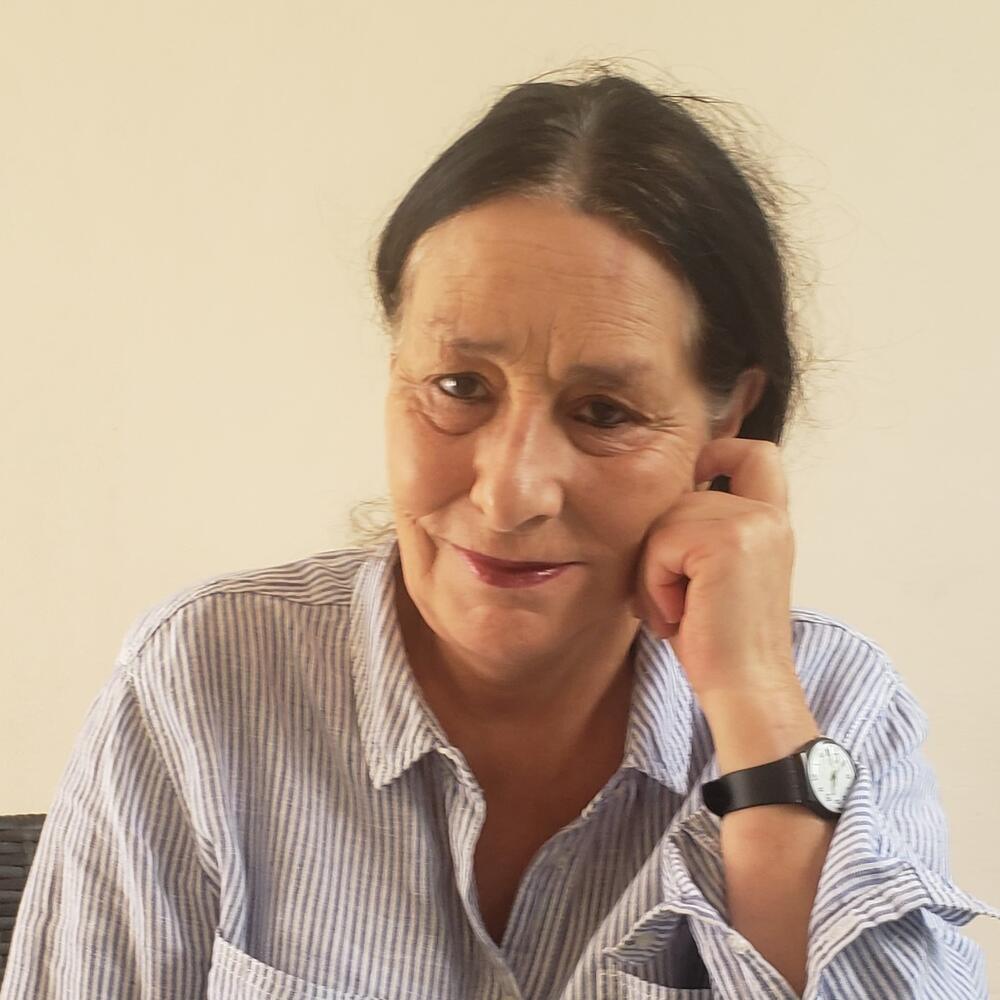






The play premiered on October 6, 1997, at Espace Malraux in Chambéry, France. It was produced by Le Carrousel in co-production with Espace Malraux / Scène nationale de Chambéry et de la Savoie (France), Le Théâtre / Scène nationale de Narbonne (France), and Théâtre du Vieux-Terrebonne (Québec).
Playwright
Suzanne Lebeau
Director
Gervais Gaudreault
Assistant Director
Robert Vézina
Cast
Mireille Thibault ou Luisa Huertas
François Trudel
Set, Costume, Props, and Projection Design
Francine Martin
Lighting Design
Dominique Gagnon
Sound Design
Diane Leboeuf
Makeup and Hair Design
Pierre Lafontaine
Special Effects
Éric Gendron
Podorhythmics and Voice Coaching
André Marchand
Paméla's Voice
Léa Forcier-Depatie
Music
The Lonesome Touch, Green Linnet Records - GL1181
Martin Hayes (violon)
Dennis Cahill (guitare)
Production Director
Dominique Gagnon
Photo Credit
François-Xavier Gaudreault
You will also like...