Conte de la Lune
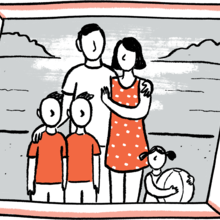
Using a diary discovered in a forgotten trunk, a son invites us to share with him a pivotal moment from his father’s childhood—his father, a Spanish immigrant who later settled in Quebec. We are taken back to a summer morning in 1940, in a small village in Catalonia, where young Joan, ten years old, wakes up with a word on his lips—a marvelous invention. A word entirely absent from the dictionary, one that Joan is determined to give meaning to.
A few days later, Joan’s father returns home after a long absence caused by the Spanish Civil War. With the mother’s warm complicity, a tender and luminous bond develops between this father, an “inventor of better worlds,” and this son, an “inventor of words.” Together, they give Joan’s new word a radiant and lasting meaning.
Conte de la Lune is the first play in the Trilogy of Emigration.
Here is an excerpt from the full teaching guide. A shorter version will also be made available to you upon purchase. All materials are in French.
Here is an overview of the teaching tools included with the purchase of the audio play:

Video Capsule – The Dramatic Text (for elementary-level students)
A literary form written for the stage, the dramatic text is at the heart of the Théâtrophone experience. In this video capsule, Sam and Sacha explore the different elements of a dramatic text, introducing students to stage directions, dialogue, and the unique features of audio theatre.
Video Capsule – Stage Directing (for elementary-level students)
Stage directing means guiding an artistic work and bringing all of its elements together into a harmonious performance, much like a conductor leading an orchestra. In this video capsule, Sam and Sacha introduce students to the work of directing and performance direction.
Video Capsule – Vocal Interpretation (for elementary-level students)
A subtle blend of instinct and technique, vocal performance is what brings characters to life in an audio play. In this video capsule, Sam and Sacha explore vocal expression, highlighting the most important elements of the creative process.
Video Capsule – Sound Design (for elementary-level students)
In theatre, sound design encompasses music, sound, and atmosphere, while also playing an important dramatic role in the interpretation of a work. In this video capsule, Sam and Sacha present the different stages involved in creating a soundscape.
Video Capsule – The Dramatic Text (for secondary-level students)
A literary genre unique to theatre, dramatic text is a central element of the Théâtrophone experience. In this video clip, historian and critic Alexandre Cadieux introduces young audiences to the structure and conventions of dramatic text, while preparing them to listen to theatre.
Video Capsule – Stage Directing (for secondary-level students)
Stage directing means overseeing every aspect of an artistic work in order to present audiences with a production in which all elements work together in harmony, much like a conductor leading an orchestra. In this video capsule, stage director Édith Patenaude explores the fundamentals of her craft, as well as the unique aspects of directing readings for audio theatre.
Video Capsule – Vocal Interpretation (for secondary-level students)
A subtle blend of instinct and technique, vocal interpretation is what brings characters to life in audio theatre. In this video capsule, actress and diction coach Maude Bouchard breaks down vocal work to reveal its complexity to students — and above all, its immense creative potential.
Video Capsule – Sound Design (for secondary-level students)
In theatre, sound design encompasses music, sound, atmosphere, and serves as an important dramatic element in the interpretation of a play. In this video capsule, composer and sound designer Jean Gaudreau (also known as Larsen Lupin) invites students to explore the world of sound creation.
Video Capsule – Classical Theatre (for secondary-level students)
This new video capsule is an optional addition to the proposed educational journey. In this video capsule, Marie-Eve Pelletier and Carl Béchard invite students to discover the history and conventions of classical theatre.
Video Capsule – Exploring Molière (for secondary-level students)
This new video capsule is an optional addition to the proposed educational journey. In this video capsule, Marie-Eve Pelletier and Carl Béchard invite students to discover the work of Molière.
Play Excerpt
Activities Guide (elementary-level)
Activities Guide (secondary-level)
Glossary
Student Workbook (Grades 3 to 6)
Student Workbook (Secondary School)
Language
The play takes place in Spain, and some lines are spoken in Catalan or with an accent.
Sensitive Content
Set in 1940, this play references the Spanish Civil War. The main character’s father, a revolutionary inventor, is released from prison after being imprisoned by the dictatorship.
Bibliographic Information




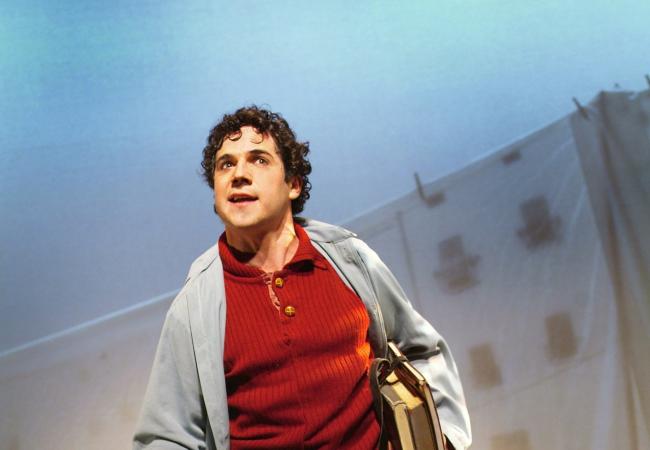
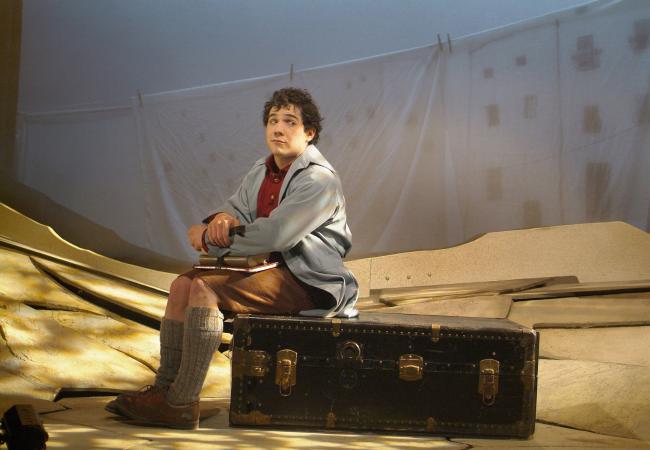
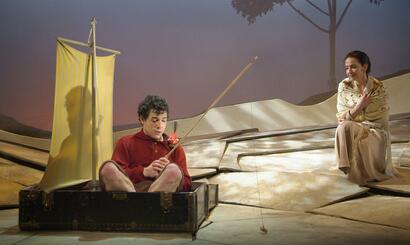
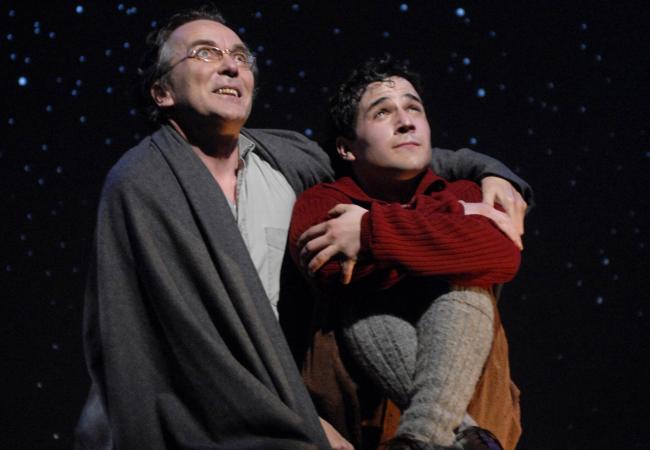
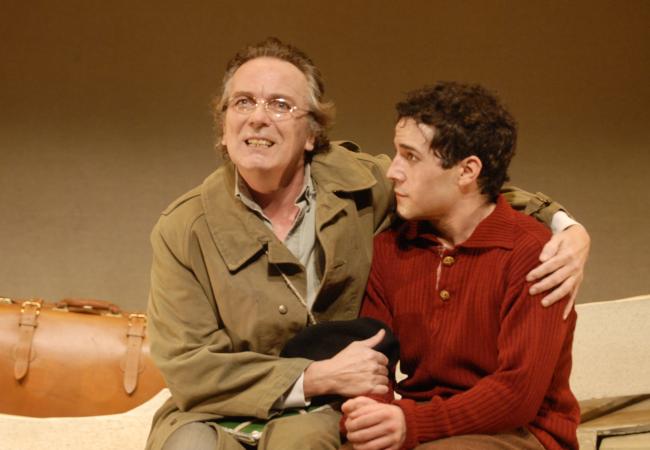
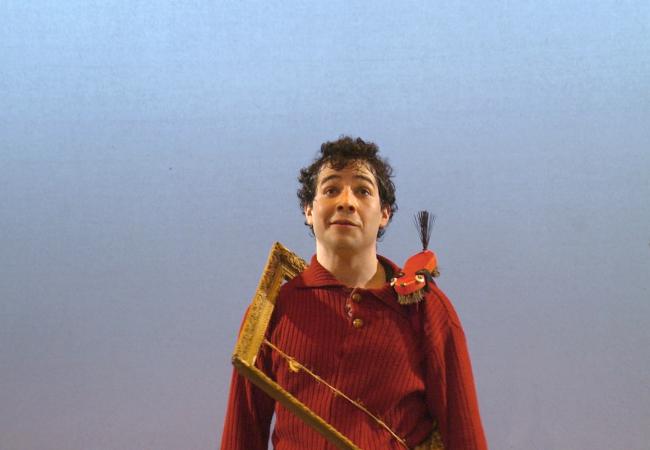
The play premiered at the Théâtre populaire d’Acadie in February 2006 and at Théâtre jeunesse Les Gros Becs in March 2006.
In addition to drawing on a romanticized version of the author's family history, the play is freely inspired by (and often borrows directly from) the following short stories by Pere Calders: En començar el dia, Demà a les tres de la matinada, Raspall, and La lluna a casa, published in Catalan by Edicions 62.
Playwright
Philippe Soldevila, inspiré de nouvelles de Pere Calders
Director
Philippe Soldevila
Assistant Director
Hélène Blanchard
Set Design
Luc Rondeau
Erica Schmitz
Music and Sound Design
Jean-François Mallet
Lighting Design
Christian Fontaine
Stage Manager
Katia Talbot
Original Cast
Christian Essiambre, Réjean Vallée and Agnès Zacharie
Touring Cast
Christian Essiambre, Daniel Simard France LaRochelle and Agnès Zacharie
Photography
Louise Leblanc
A Production by
Théâtre des Confettis and Théâtre populaire d'Acadie, in collaboration with Théâtre Sortie de Secours
You will also like...